
Dental Bridges Reno
Making Your Smile Whole Again
To be clear, tooth loss doesn’t just happen to one’s isolated teeth. It’s entirely possible – even likely, sometimes – to lose pearly whites that were adjacent to each other. For this reason (and similar ones), our practice offers dental bridges in the Bethlehem area. These special restorations fill the unwanted gaps in your grin, thus improving your appearance and oral health. For more details about them and how they work, please keep reading or book a consultation soon!
Why Choose Penn Dental Arts for Dental Bridges?
- Digital, Mess-Free Dental Impressions
- Caring & Gentle Dental Team
- High-Quality Materials for Beautiful, Long-Lasting Results
What is a Dental Bridge?
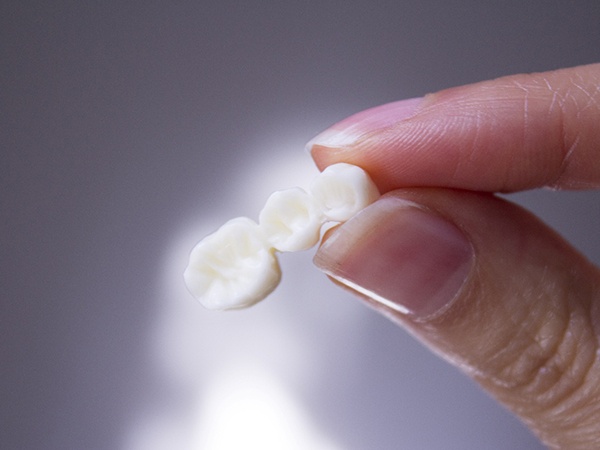
A dental bridge is a unique prosthetic device that replaces lost teeth. However, its design differs from that of dentures or dental implants; it consists of materials fused to either side of an artificial tooth. Due to this makeup, a bridge can only restore one to four missing neighboring teeth.
Dental bridges suit patients without adjacent teeth. Such people can get full smiles with just one treatment, so they’re ideal candidates who don’t require much follow-up care. That said, qualifying for a dental bridge is otherwise easy; you only need decent oral health.
Types of Dental Bridges
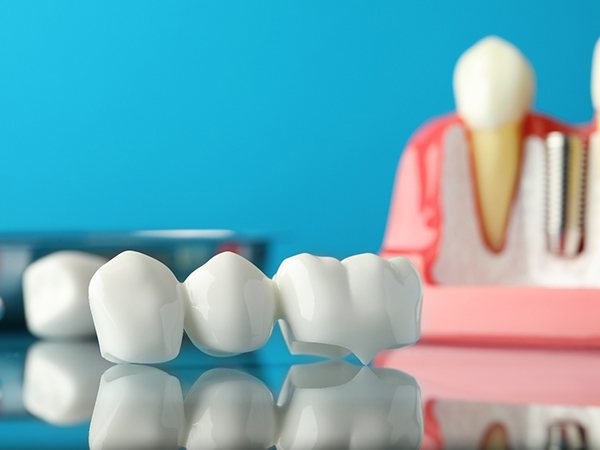
Dr. Patel will assess your smile (via oral exam) before you receive a restoration. In doing so, he’ll discern which (if any) type of dental bridge you should get. These two kinds are:
Traditional Dental Bridge
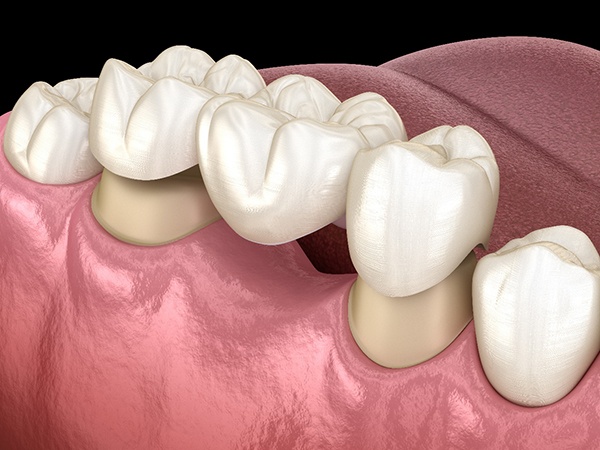
A traditional dental bridge is the more time-tested sort, as you'd expect from its name. It consists of two (or more) dental crowns fused to either side of an artificial tooth. Due to that design, the traditional bridge uses nearby natural teeth – or “abutments” – to remain stable.
This bridge usually costs little, so it’s well-suited for patients with smaller budgets. However, note that it permanently alters existing teeth during the placement process.
Implant Bridge
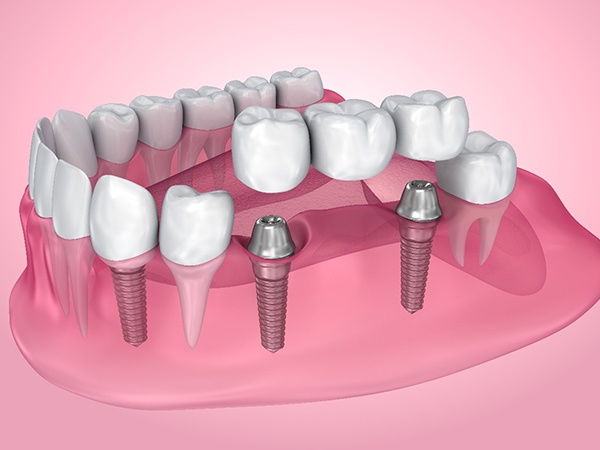
An implant bridge offers more permanent results than a traditional one. Indeed, it uses dental implants – small metal posts – to secure itself instead of crowns and abutments. The appliance is thus highly secure and has little to no chance of falling out. With proper care, it can also last a few decades.
Since it doesn’t alter existing teeth, an implant bridge is the costlier kind. You’d do well to consider your budget before you commit to it.
The Benefits of Getting a Dental Bridge
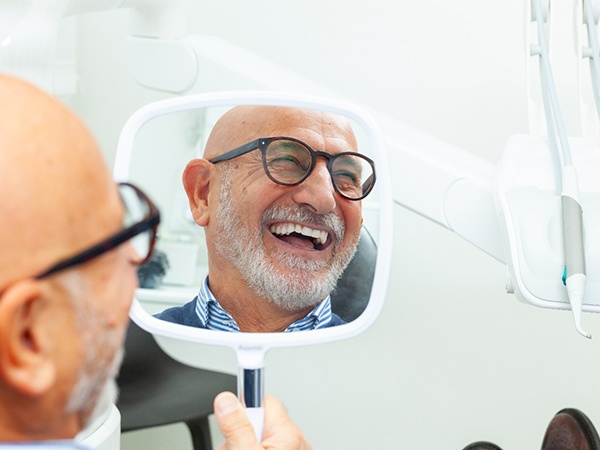
A dental bridge from our office can work wonders, offering benefits like:
- A Healthier Smile – Because a dental bridge “fills” smile gaps, it reduces the spread of harmful mouth bacteria. The device also keeps your remaining teeth from tilting as much.
- Better Looks – A good dental bridge will blend seamlessly with your smile, as its artificial teeth are made of tooth-colored porcelain.
- Easy Eating – Since its artificial teeth are durable, a dental bridge should help you chew more foods than before.
- Enduring Results – Dental bridges last an average of 5-15 years, but well-kept ones are known to work for 20 years or more.
Dental Bridges FAQs
Can I take my dental bridge out?
Perhaps because dentures are intended to be easily removed and reinserted for cleanings and some providers refer to partial sets as “removable dentures”, some patients wonder whether their dental bridge is intended to come out easily. But this phrasing is misleading and refers to two very different solutions for tooth loss.
Although partial dentures can be taken out easily, bridges are cemented over healthy teeth or dental implants that are surgically placed on either side of the gap in your grin, and generally aren’t intended to be removed except by a qualified professional for repairs or replacement.
Does it hurt to get a dental bridge?
It’s natural to wonder whether this process might cause discomfort, but that’s usually not the case. In some cases, Dr. Patel will need to remove a small amount of enamel from the teeth that support your new bridge, but our team will numb your mouth beforehand to prevent pain. We also offer multiple types of dental sedation to help even the most anxious patients feel calm and comfortable throughout their procedure.
That means you likely won’t have to worry about potential discomfort until the meds wear off. Then, it’s normal to feel sensitivity for a few days as your mouth adjusts to the changes. This usually wears off on its own and can be managed with over-the-counter medications, such as acetaminophen or ibuprofen, but if you experience persistent or severe aches, please contact our office so we can ensure your restoration fits and functions correctly.
What are dental bridges made from?
These lifelike replacements are made from resilient, biocompatible materials, such as porcelain or composite resin, that reflect light more naturally and can be customized to match the size, shape, and tone of your enamel for beautiful, seamless results.
But these resilient prosthetics are usually less porous than the teeth you were born with, meaning they don’t soak up stain particles as easily, helping to preserve their shade. They also resist chips, cracks, and other physical damage, often lasting 10+ years with proper care.
How long do dental bridges usually last?
Most patients can expect their restoration to last anywhere between 5 and 15+ years, but its lifespan can vary from person to person because it’s affected by your individual circumstances.
For example, if you neglect your daily dental hygiene and eat lots of sugary or acidic foods, you could develop tooth decay or gum disease that erodes the underlying structure holding your bridge in place, which can cause it to fail. Its longevity can also be affected by where it’s located in your mouth, as molars tend to sustain more pressure from biting and chewing than your front teeth do, which can wear them down faster.
You can help preserve your prosthetics by:
- Brushing and flossing twice daily.
- Avoiding overly hard, crunchy, sticky, sugary, acidic, or darkly colored foods.
- Quitting harmful habits, like smoking or biting your fingernails.
- Scheduling a routine checkup and cleaning with our team every 6 months.